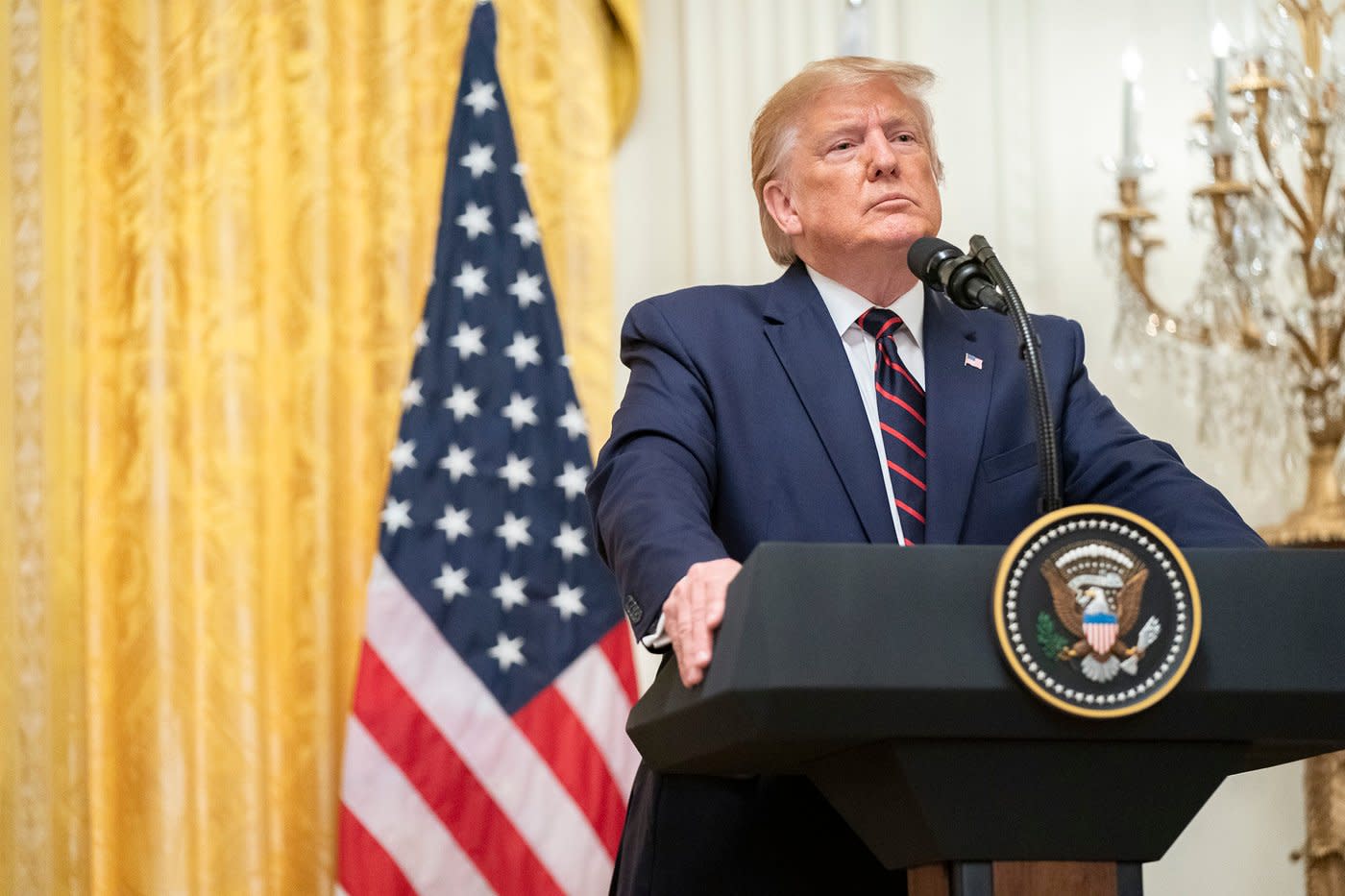
From a purely statistical perspective, Wall Street has performed extremely well during Donald Trump’s time in the White House.
During Trump’s first presidential term, the three major U.S. stock market indexes posted impressive gains. The Dow Jones Industrial Average rose about 57 percent, the S&P 500 climbed roughly 70 percent, and the Nasdaq Composite surged an extraordinary 142 percent.
The momentum did not stop there. Since Trump began his second, non-consecutive term, markets have continued to rise. By the end of February 2026, the Dow, S&P 500, and Nasdaq had all climbed roughly 13 to 15 percent.
For investors, those numbers paint a picture of strong economic confidence and continued market optimism.
But beneath the surface, some analysts believe the current rally could be hiding serious risks that might eventually lead to a major correction or even a market crash.
Interestingly, the biggest threats may not be the ones dominating headlines.
Tariffs Grab Headlines, But They May Not Be the Biggest Risk
One of the most talked-about aspects of Trump’s economic policy has been tariffs and trade disputes.
Tariffs are taxes placed on imported goods. Governments often use them to protect domestic industries or gain leverage in trade negotiations.
Critics argue that tariffs can hurt businesses by increasing costs and disrupting supply chains. Several economic studies have suggested that tariffs implemented during Trump’s presidency placed additional pressure on U.S. companies.
Because of this, many investors worry that sudden changes in trade policy could trigger market volatility.
However, some analysts believe tariffs are not the biggest threat facing the stock market.
Instead, they point to two deeper risks that could have a far greater impact on Wall Street.
The Federal Reserve Could Become a Major Market Concern
The first major concern revolves around the Federal Reserve.
The Federal Reserve, often simply called the Fed, is the central bank of the United States. Its primary responsibilities include managing inflation, supporting employment, and maintaining economic stability.
To achieve these goals, the Fed adjusts interest rates and buys or sells government bonds to influence financial conditions.
Normally, investors view the Federal Reserve as a stabilizing force in the economy.
But recently, some analysts have begun to worry that the Fed could become a source of uncertainty instead.
Growing Divisions Within the Federal Reserve
One reason for concern is increasing disagreement among members of the Federal Open Market Committee.
This committee is responsible for setting U.S. monetary policy and determining changes to interest rates.
In recent meetings, members have struggled to reach a unified approach.
At least one member has dissented in each of the last five policy meetings. In some cases, the disagreements have been dramatic.
For example, during two recent meetings, the majority supported modest interest rate cuts. But some members wanted no cuts at all, while others pushed for much larger reductions.
Healthy debate is normal within the Federal Reserve. However, investors can become uneasy when policymakers appear divided about the direction of the economy.
Markets tend to prefer clarity and predictable policy decisions.
If investors begin to believe the Fed lacks a clear strategy, confidence in the central bank could weaken.
Leadership Changes Could Create Additional Uncertainty
Another issue facing the Federal Reserve involves leadership.
Current Federal Reserve Chair Jerome Powell’s term is scheduled to end in May.
President Trump has nominated former Federal Reserve governor Kevin Warsh as a potential successor.
If confirmed, Warsh could bring a very different policy approach to the central bank.
Warsh has historically supported higher interest rates to keep inflation under control. Economists often describe this stance as “hawkish.”
However, financial markets are currently expecting further interest rate cuts to support economic growth.
If Warsh were to take office and pursue a more aggressive approach to controlling inflation, it could surprise investors.
Such a shift might lead to higher borrowing costs for businesses and consumers.
How the Fed’s Balance Sheet Could Affect Markets
Another area where Warsh has voiced strong opinions is the Federal Reserve’s massive balance sheet.
Over the past decade, the central bank purchased large amounts of government bonds and mortgage-backed securities to support the economy.
Today, the Fed holds roughly 6.6 trillion dollars in assets.
Warsh has criticized the size of this balance sheet and suggested that the central bank should reduce it.
If the Fed began selling large amounts of bonds, it could push long-term interest rates higher.
Higher interest rates can increase mortgage costs, raise borrowing expenses for companies, and reduce investment activity.
All of these factors could create downward pressure on stock prices.
High Stock Market Valuations Are Another Warning Sign
While the Federal Reserve presents one potential risk, another major concern is the current level of stock market valuations.
Put simply, many analysts believe stocks have become very expensive.
When stock prices rise much faster than company earnings, the market can become vulnerable to sudden corrections.
Although valuations alone do not cause market crashes, they often signal that investors have become overly optimistic.
One of the most widely respected tools for measuring market valuations is the Shiller Price-to-Earnings Ratio.
Understanding the Shiller P/E Ratio
The Shiller P/E Ratio, also known as the CAPE ratio, was developed by economists in the late 1980s.
Unlike the traditional price-to-earnings ratio, which compares stock prices to earnings over the past year, the Shiller P/E uses the average of inflation-adjusted earnings over ten years.
This approach smooths out economic cycles and provides a clearer picture of long-term valuations.
Historically, the average Shiller P/E ratio over the past 150 years has been around 17.
Today, however, the ratio has climbed to levels rarely seen in history.
Since late 2025, it has fluctuated between 39 and 41.
That makes the current market one of the most expensive in modern history.
The only period with higher valuations was the dot-com bubble of the late 1990s.
What History Says About Extremely High Valuations
While the Shiller P/E ratio cannot predict exactly when markets will fall, history shows a clear pattern.
Whenever the ratio has risen above 30 during long bull markets, major market declines have followed.
There have been six such periods since the late nineteenth century, including today.
After the previous five instances, stock markets experienced severe downturns.
In some cases, losses were dramatic.
During the collapse of the dot-com bubble, the Nasdaq index fell about 78 percent. The S&P 500 dropped roughly 49 percent.
During the Great Depression, the Dow Jones Industrial Average lost nearly 89 percent of its value.
These historical examples highlight how dangerous extremely high valuations can become.
Why the Market Could Still Continue Rising
Despite these warnings, it is important to remember that markets can remain expensive for long periods.
Valuation metrics like the Shiller P/E ratio are not precise timing tools.
They cannot tell investors when a correction will begin.
Markets can continue climbing even when valuations appear stretched.
Factors such as strong corporate profits, technological innovation, and economic growth can support higher stock prices for extended periods.
This is why many investors remain optimistic despite the warning signs.
What Investors Should Watch in the Coming Years
For investors trying to navigate the current environment, several factors will be important to watch.
First, the direction of Federal Reserve policy will play a major role in shaping market conditions.
Interest rate decisions and changes to the Fed’s balance sheet could influence borrowing costs across the entire economy.
Second, stock valuations will remain a key indicator of market risk.
If prices continue rising without strong earnings growth, the gap between valuations and fundamentals could widen further.
Finally, political and economic developments will continue influencing market sentiment.
Trade policies, geopolitical events, and technological breakthroughs can all shift investor expectations.
Balancing Optimism With Caution
The stock market’s performance during Donald Trump’s presidency has been undeniably strong.
Major indexes have delivered impressive gains, and investor confidence has remained high.
But history suggests that long bull markets often carry hidden risks.
While tariffs and trade disputes frequently dominate political discussions, deeper structural issues could pose a greater threat to Wall Street.
Potential uncertainty at the Federal Reserve and historically high market valuations represent two risks that investors cannot ignore.
Whether these factors eventually trigger a correction or simply lead to slower market growth remains to be seen.
What is clear is that markets rarely move in a straight line forever.
Periods of rapid gains are often followed by periods of adjustment.
For investors, the key may be maintaining a balanced perspective — enjoying the benefits of a strong market while remaining aware that even the most powerful bull runs eventually face challenges.